
Proactive Health and Biomonitoring: Could Tracking Your Body Today Help You Make Better Health Decisions Tomorrow?
Good morning!
I hope you're having a great day and that somewhere along the way today, you've had an opportunity to think about your health and wellness.
For most of human history, we have generally approached health in a fairly reactive way.
Something starts hurting.
Our energy drops.
We gain weight.
Our blood pressure goes up.
We become sick.
And then we start looking for answers.
But one of the biggest and most interesting trends in health and wellness today is a shift toward something different:
Paying closer attention to the signals your body is giving you before you are forced to pay attention.
This growing approach is often called proactive health, and one of the tools driving the conversation is biomonitoring.
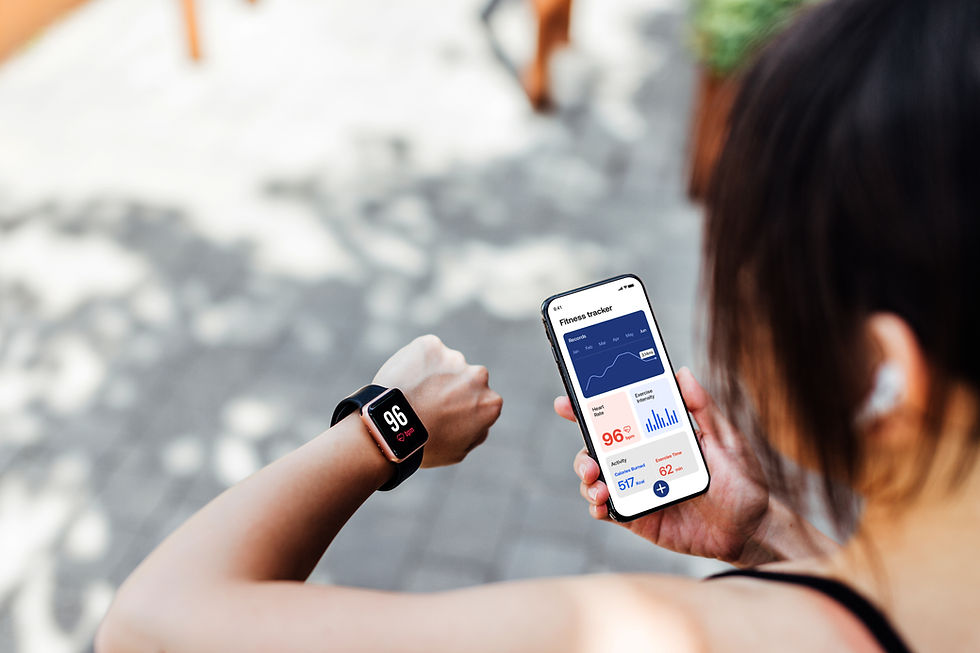
From smartwatches and fitness trackers to sleep monitors, heart-rate data, continuous glucose monitors, connected scales, and increasingly sophisticated wearable sensors, people now have access to more information about their bodies than ever before.
The question, however, isn't simply:
"How much health data can I collect?"
The better question may be:
"What can I learn from my health data that actually helps me make better decisions?"
And that's where things get interesting.
What Is Proactive Health?
Proactive health is the idea of taking intentional steps to understand, support, and improve your health before waiting for a problem to force your attention.
That may include:
Regular preventive medical care
Monitoring important health trends
Paying attention to sleep
Tracking physical activity
Monitoring changes in resting heart rate
Improving nutrition
Building and maintaining strength
Managing stress
Maintaining a healthy body composition
Monitoring medically relevant measurements when appropriate
Recognizing changes in how your body performs and feels
In other words:
Don't wait until you're forced to care about your health. Build habits that allow you to care about it now.
That doesn't mean obsessing over every number.
It means becoming more aware.

What Is Biomonitoring?
Biomonitoring involves collecting information about biological or physiological signals over time.
Depending on the technology being used, that information may include things such as:
Heart rate
Resting heart rate
Physical activity
Step counts
Sleep patterns
Body temperature trends
Blood oxygen measurements
Blood glucose measurements
Blood pressure measurements using appropriate validated devices
Body weight
Other emerging biological markers
Modern wearable sensors are increasingly capable of collecting continuous streams of physiological information, creating the possibility of identifying changes and patterns that might be missed when we only look at our health occasionally.
But there is an important point to remember:
Data is information. It is not automatically understanding.
A number without context can sometimes be helpful.
It can also sometimes create unnecessary stress or lead people to draw conclusions that aren't supported by the evidence.
That is why biomonitoring should ideally support healthy decision-making—not replace professional medical evaluation when it is needed.
The Top 10 Potential Benefits of Proactive Health and Biomonitoring
1. You May Begin to Notice Patterns You Would Otherwise Miss
One of the most valuable things about tracking information over time is the ability to see patterns.
For example, you might notice that:
Your resting heart rate tends to rise when you're under significant stress.
Your sleep quality changes after alcohol or late-night eating.
Your activity level drops during particularly demanding work weeks.
You feel better when you consistently walk after meals.
Your recovery is worse after several nights of poor sleep.
One isolated number may not tell you much.
A pattern over weeks or months can be far more useful.
The goal isn't to judge yourself.
The goal is to learn.

2. It Can Encourage More Daily Movement
One of the simplest examples of biomonitoring is step tracking.
For many people, seeing their daily movement provides a helpful reminder that exercise isn't limited to the hour they spend in the gym.
Walking.
Taking the stairs.
Standing more often.
Moving between meetings.
Playing with your kids.
Going for a walk after dinner.
All of it counts.
Sometimes awareness alone can encourage people to move more consistently.
3. Sleep Tracking Can Help Identify Lifestyle Patterns
Sleep trackers have become incredibly popular.
While consumer devices cannot replace a proper medical evaluation for a suspected sleep disorder, they may help some people recognize broad trends in their sleep habits.
You might discover that:
Your bedtime changes dramatically from day to day.
Your sleep duration is consistently shorter than you thought.
Late-night work affects your sleep routine.
Exercise earlier in the day helps you maintain a more consistent schedule.
The most useful question isn't always:
"Did my device say I had a perfect night of sleep?"
Instead, ask:
"What habits seem to be associated with my best and worst nights?"
Wearable technologies can provide useful longitudinal information, but measurements and estimates vary in reliability and should be interpreted with appropriate caution.
4. Resting Heart Rate Can Become a Useful Trend to Watch
Your heart rate naturally changes throughout the day.
Exercise, stress, sleep, hydration, illness, medications, and many other factors can influence it.
For some individuals, monitoring their resting heart rate over time can provide another piece of information about how their body is responding to their current lifestyle.
A single reading generally matters less than a sustained change from your normal pattern.
Again:
The trend is often more interesting than the individual number.
If you notice a significant or persistent change—especially if it is accompanied by symptoms—that's a conversation worth having with an appropriate healthcare professional.

5. You Can Learn More About Your Recovery
One of the biggest mistakes people make with exercise is assuming that progress comes only from working harder.
Recovery matters.
Biomonitoring can sometimes help people become more aware of factors influencing their recovery, including:
Sleep consistency
Training volume
Rest days
Daily movement
Stress
Changes in heart-rate patterns
The goal should never be to allow a device to completely control your training.
Your body is not a video game. But combining your personal experience with useful trends can sometimes help you make smarter decisions.
6. It Can Help Create More Personalized Health Habits
This is where I believe the proactive health movement has tremendous potential.
There is no single nutrition plan, exercise routine, sleep schedule, or stress-management strategy that works perfectly for everyone.
Two people can follow the same program and have very different experiences.
Monitoring your habits can help you ask more personalized questions:
What type of exercise helps me feel my best?
When am I most consistent with workouts?
How does my sleep affect my appetite?
When do I tend to become less active?
What habits seem to improve my energy?
The more honestly you understand your own lifestyle patterns, the easier it can become to personalize your approach.

7. It May Encourage Earlier Conversations About Health
One of the most promising ideas behind proactive health is not that technology will diagnose everything.
It's that better awareness may encourage people to seek appropriate medical attention when something genuinely changes.
Modern research into wearable sensors continues to explore how continuous physiological data could help identify meaningful changes earlier; particularly when wearable information is combined with established clinical tools and professional evaluation.
The key word here is:
Conversation.
A wearable device may provide information.
A qualified healthcare professional helps determine what that information means in a medical context.

8. It Can Improve Accountability
One of the biggest reasons people hire a coach is accountability.
Health tracking can provide another layer of awareness.
It's harder to convince yourself that you've been consistently active when your own weekly patterns tell a different story.
It's harder to believe you've been sleeping eight hours when your bedtime habits suggest otherwise.
But accountability should not become punishment.
The goal is not:
"I failed to hit my number today."
The goal is:
"What can I learn from today?"
That shift can make all the difference.
9. It Can Help Turn Health Into a Long-Term Project
Your health is not a 30-day challenge.
It is not a six-week diet.
It is not one perfect workout program.
Your health is something you build over decades.
Tracking certain meaningful trends may help people think beyond the immediate goal of:
"I want to lose 10 pounds."
And toward bigger questions such as:
How strong do I want to be ten years from now?
How mobile do I want to remain?
How much energy do I want for my family?
What habits will support my independence as I age?
Those are powerful questions.
And they're often more motivating than a number on a scale.
10. It Shifts the Focus From Reacting to Preparing
This may be the greatest potential benefit of all.
Proactive health is about preparation.
Building strength before losing it.
Improving balance before a fall.
Developing healthier eating habits before a health scare.
Learning to manage stress before burnout.
Improving sleep before chronic exhaustion becomes your normal.
Moving your body before inactivity becomes deeply ingrained.
None of us can control everything that happens to our health, but most of us have more influence over our daily habits than we sometimes realize.

The Other Side of Biomonitoring: More Data Isn't Always Better
This is an important conversation. Technology can be incredibly useful, but constantly monitoring every aspect of your body can also become overwhelming.
Some people may become anxious about small fluctuations that are completely normal,
others may make significant lifestyle changes based on information they don't fully understand,
and not every consumer device has the same level of accuracy or medical validation.
For example, the FDA distinguishes between many general wellness products and devices intended for medical purposes, and consumers should be particularly cautious about products making medical measurement claims without appropriate authorization or validation.
A wearable device can be a helpful tool. It should not become your doctor.
My Recommendation: Start With the Basics
If you're interested in proactive health and biomonitoring, don't feel like you need to purchase five devices and start tracking 100 different numbers.
Start simple. Choose one or two areas that could actually help you.
For example:
If your biggest challenge is movement:
Track your daily steps or weekly exercise consistency.
If your biggest challenge is sleep:
Track your bedtime routine and sleep duration.
If your biggest challenge is stress:
Pay attention to when your stress is highest and what activities help you recover.
If your biggest challenge is nutrition:
Track meals for a short period to better understand your current habits.
If you have a medical condition:
Work with your healthcare team to determine whether medically appropriate monitoring tools could be helpful.
The best data is not necessarily the most data.
The best data is the information that helps you make a better decision.
Don't Let Technology Replace the Fundamentals
This is probably the most important point in the entire article.
You can wear the newest smartwatch.
Track your sleep.
Monitor your steps.
Analyze your heart rate.
Buy the latest health ring.
And still ignore the fundamentals.
Technology cannot replace:
Consistent movement
Strength training
Nutritious food
Adequate hydration
Quality sleep
Stress management
Healthy relationships
Preventive medical care
Listening to your body
The technology is the tool. Your lifestyle is still the foundation.

The Future of Health May Be More Personal Than Ever
The future of health and wellness is moving toward greater personalization.
Wearable sensors and other biomonitoring technologies continue to expand, and researchers are exploring ways to collect increasingly detailed physiological information in real time. At the same time, large-scale validation, reliability, privacy, and appropriate interpretation remain important challenges.
That's exciting, but you don't need to wait for the future to begin taking a more proactive approach to your health. You can start today.
Take a walk. Build strength. Eat another serving of vegetables. Go to bed a little earlier. Take a few minutes to breathe. Schedule your preventive appointments. Pay attention to patterns.
Ask questions. Become curious about your health.
Because sometimes the most powerful health tool isn't the device on your wrist.
It's the decision to start paying attention.
This post is meant to provide education and encourage curiosity around this rapidly growing area of health and wellness. It is not intended to diagnose or treat medical conditions. If you have concerning symptoms or questions about medical measurements, medications, or a health condition, please speak with an appropriate healthcare professional.
If you need help with motivation, accountability, online training, nutrition, exercise programming, sleep optimization, stress management, or building healthier habits around the information you're already tracking, I would be honored to help.
I offer online coaching for clients across North America, as well as in-home training throughout the southeast suburbs of Phoenix. Amazing deals on my regular hourly rates until gas prices come back down to $3.50/gallon!
Upwards and onwards in all of the best ways possible—and here at your service!
Sean Neff
Owner, Challenge Fit AZ
Master Health and Wellness Coach


Comments